How Can You Scale It If You Don't Trust It

summary
Claims a concrete approach: use guardrails that enforce role-based access and resource quotas so developers get limited, auditable power without full ops privileges; shows demos with Amazon VMs, Kubernetes primitives, and read‑only DB replicas plus injected faults (latency monkey) to prove failures are contained; measures success by whether teams can change config in a safe dry run and recover from incidents with audit trails and automated revocation; vendors get a checklist to demand local policy support.
AI-written summary · about
chapters (22)
- 0:00Intro
- 1:44What is running in your connection
- 3:14Answering your powers
- 3:41I miss my best revisions
- 3:55Youre okay
- 4:22Action
- 5:08Partner
- 5:31Slide
- 6:13Demand
- 6:38Situation
- 7:59Maximum Friction
- 8:44Vision Destruction
- 9:02Wild Wild West
- 10:02What would be better
- 10:55Do that
- 11:21Work out the workload
- 16:34What Did I Eat
- 19:53A Businessman Is
- 20:33Where Can You Find A Problem
- 22:10Google and Congress
- 23:32My guess
- 23:51Im sorry tradition
related talks
 20mHow Can You Scale It If You Don't Trust It?
 27mHow can you Scale if you Don’t Trust It?
 23mScalable security: how to win friends and not burn...
 43mTitans of Scale: Strategies to Scale Security in Expanding Organizations
 58mCreate enterprise-wide preventive guardrails
 44mGuardrails in the Cloud
 45mPerformance-by-Design: Embedding Intelligent Scaling and Guardrails Into Platform Engineering
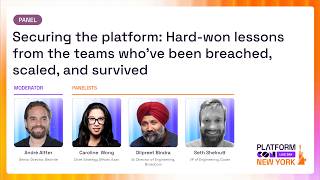 29mSecuring the platform: Hard-won lessons from the teams who've been breached, scaled, and survived