Exploring ChatGPT for Improved Observability

summary
Explains how ChatGPT and GPT‑3.5 style models plug into observability: generate embeddings from logs and metrics, store them in a vector database, build a context prompt and call the model to suggest root cause and remediation steps; Dynatrace prototypes a co‑pilot that queries telemetry and returns JSON‑structured recommendations. Notes token limits, nondeterministic completions, hallucinations, and prompt engineering techniques (zero/one/few‑shot, RL with human feedback). Warns fine‑tuning or private hosting costs millions but Azure/OpenAI offer enterprise fine‑tuning without exposing data.
AI-written summary · about
chapters (12)
- 0:00Introduction and speaker intro
- 1:35Why observability matters
- 8:48Modern observability challenges
- 10:13AI and ML in observability
- 12:01Generative AI and LLMs explained
- 23:10ChatGPT for observability use cases
- 25:38Limitations of large language models
- 28:49Prompt engineering basics
- 35:20Building AI agents for issue resolution
- 37:53Hyperscalers investing in AI
- 39:40Dynatrace’s AI initiatives
- 41:49Q&A and closing remarks
related talks
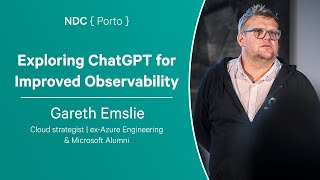 38mExploring ChatGPT for Improved Observability
 23mExploring ChatGPT for Improved Observability
 02h 00mChatGPT & Prompt Engineering
 01h 01mHow ChatGPT Works
 43mBuild and Maintain your Company Copilot with Azure ML and GPT-4 Q&A
 29mThe Hater's Guide to Dealing with Generative AI
 01h 00mGoing beyond ChatGPT: introduction to prompt engineering & LLMs
 01h 56mPrompt Engineering: The Path to Effective Work with ChatGPT