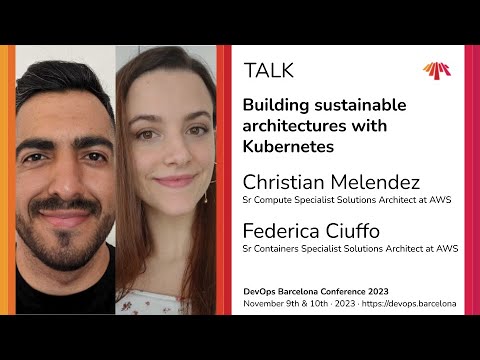
Building sustainable architectures with Kubernetes
summary
Shows how to cut EKS compute cost and carbon by combining Graviton, EC2 Spot and Karpenter autoscaling with concrete numbers and configs: Graviton: ~40% better price‑performance, up to ~60% more energy efficiency, uses multi‑arch AMIs and container registry support; mix Spot + On‑Demand with Karpenter consolidation and nodeclasses to reduce blast radius and autoscale by pod unschedulables. Demo provisions node claims, runs consolidation simulations, and cites customer savings of ~70–80% on EC2.
AI-written summary · about
chapters (15)
- 0:00Introduction to sustainability
- 2:23Kubernetes architecture on AWS
- 7:24Right sizing Kubernetes clusters
- 8:52Introducing Karpenter
- 12:04Purchase options and spot instances
- 15:19Adopting AWS Graviton
- 18:14Demo introduction
- 20:30Karpenter configuration
- 27:13Deploying applications
- 30:26Optimizing application resources
- 32:53Switching to Graviton
- 34:39Using spot instances
- 37:33Mixing compute options
- 41:09Karpenter blueprints
- 42:12Q&A and future plans
related talks
 34mReduce Costs and Optimize on Your Cloud with Karpenter
 27mHarness the power of Karpenter to scale, optimize & upgrade K8s
 22mUse Karpenter to scale, optimize & upgrade K8s
 40mOptimize EKS Cost and Scaling with Karpenter
 29mCutting Costs and Boosting Efficiency with Karpenter and KEDA on Kubernetes
 22mKarpenter Efficient scaling of Kubernetes clusters
 42mOptimize Amazon EKS workloads for performance and cost
 31mKubernetes workloads with Karpenter & Amazon EKS