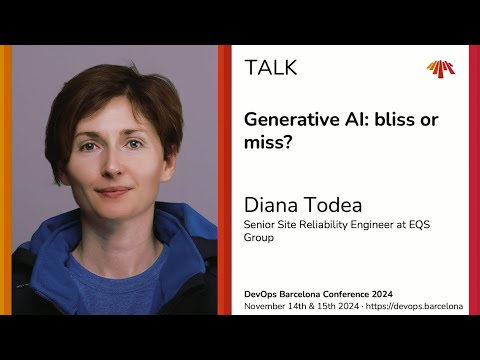
Generative AI: bliss or miss?
summary
Claims GenAI is practical for SRE work by wiring observability into LLM pipelines and shipping a working AI assistant prototype that uses logs, traces and SLOs as retrieval data. Details include RAG vs fine-tuning tradeoffs, vector DB choices (Elastic, LensDB, Quadrant) and using OpenTelemetry traces as context for prompt construction. Key findings: clean, chunked data and the right model matter, small models can beat huge LLMs for some tasks, infrastructure and inference costs are nontrivial, and production feedback must be looped back to retrain.
AI-written summary · about
chapters (12)
- 0:00Introduction and welcome
- 1:39Generative AI overview and trends
- 6:39Theoretical concepts behind Transformers
- 12:17Generative AI workflow in detail
- 15:26Retrieval Augmented Generation vs fine-tuning
- 18:17Real-world use cases and vector databases
- 20:23Infrastructure and cost considerations
- 22:09Observability with OpenTelemetry
- 25:41Data preparation and model selection
- 29:53Testing, feedback, and continuous improvement
- 33:29Resources and closing remarks
- 33:54Q&A session
related talks
 28mWhere are we going with observability?
 22mGenerative AI - A Pragmatic Business View
 31mTesting, Evaluating and Debugging Generative AI and Agentic Ap...
 29mWhen to Gen AI? A strategic framework for real-world AI adoption
 37mGenerative AI: Beyond (Just) Hype
 29mImpact of #GenerativeAI in Development and #SoftwareTesting
 11mOpen source GenAI vs. enterprise GenAI: Navigating the future of AI innovation
 15mChallenges in moving Gen AI apps to production