The Not So Subtle Price of Microservices

summary
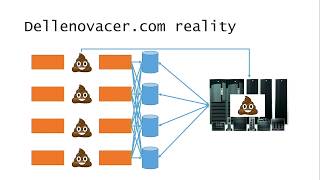
Traces show flight search spiked to ~10s because five microservices exchange ~6–7 XML messages, each ~1 MB payload and costing ~1s to encode, leaving the core search work only ~3–4s. Consolidating those five services into a modular monolith and moving hot paths to protobufs (after trying FastInfoset, JSON, BSON) removes repeated encode/decode and network hops, cutting end-to-end latency by ~12 seconds to ~1.5s, reduces CPU/network load, and avoids the coordination overhead called complecting.
AI-written summary · about
chapters (11)
- 0:00Introduction
- 1:07Microservices at Expedia
- 4:14Overt and hidden costs
- 9:10Domain complexity explained
- 15:16Uptime and dependencies
- 18:01Infinite bandwidth myth
- 25:46Right reasons to microservice
- 30:00Wrong reasons to microservice
- 36:37Modular monolith approach
- 39:46Trade-offs and conclusions
- 40:49Q&A session
related talks
 51mAvoiding Microservice Megadisasters
 42mAvoiding Microservice Megadisaster
 54mThe Long Sad History of Microservices
 43mThe Business Implications of Microservices
 45mAvoiding Microservice Megadisasters
 47mMonolith to Microserv. at 20M+ requests per second: Latency and Scale Challenges
 27mMicroservices
 38mMicroservices, a bittersweet symphony