“Digital Technology and the Environment” or “We Could Have Saved the Bees, We Chose to Release a New iPhone”
summary
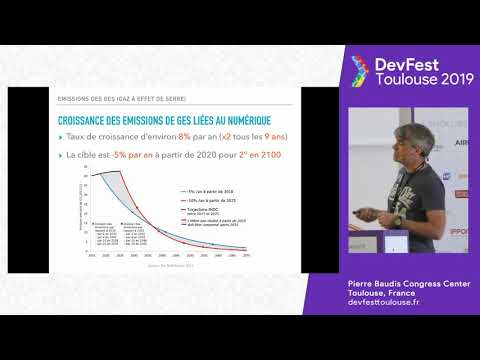
The talk presents data showing the digital sector’s rapid ~9% annual growth, with about 5 billion smartphones by 2020 and device manufacturing responsible for roughly 45% of digital energy use (terminals ~60% of total). It highlights that short replacement cycles (80–90 kg CO2 per phone) and video traffic (online video ~300 Mt CO2 in 2018; Netflix comparable to a large cement plant) drive much of the footprint, and it advocates extending device lifetimes, changing user behaviour, and implementing systemic policy limits as levers to reduce impact.
AI-written summary · about
chapters (12)
- 0:00Digital tech impact
- 3:10Energy growth
- 8:26Manufacturing impact
- 13:20Planned obsolescence
- 18:17Video energy use
- 21:25Great acceleration
- 26:45Carbon footprint
- 31:222°C warming measures
- 36:04Climate warming effects
- 40:14Scientific consensus
- 42:45Club of Rome insights
- 44:51Conclusion
related talks
 33mThe environmental impact of mobile apps : Truth or Dare?
 25mTech to the Rescue of the Planet?
 38mBetter Coding for the Climate?!
 22mOn The Path to Net Zero
 38mOpening Keynote
 01h 10mThe Environmental Impact of Digital Technology: Myths, Realities and Useful Actions
 26m“Green” development: is it even a thing?
 24mSustainable IT: The path to a greener future