An Introduction to Enterprise Design Events

summary
Argues that availability requires isolation and distribution, so enterprises propagate data with messaging and accept eventual consistency; uses Kafka broker as an example, describes a bank debit ($100) producing events consumed by multiple projections (balance vs. transaction-frequency). Recommends CQRS for one command source and many query projections, and event sourcing plus snapshots for auditability. Warns of event versioning, storage/archival scale, reconciliation, and using the strangler pattern to modernize legacy systems.
AI-written summary · about
chapters (9)
- 0:00Introduction to enterprise events
- 1:05Availability and isolation in systems
- 8:13Event-driven architecture fundamentals
- 15:21CQRS and event sourcing explained
- 23:12Designing event consumers and projections
- 30:17Master data and bounded contexts
- 37:23Legacy system modernization strategies
- 44:23Cultural and domain considerations
- 51:33Q&A and closing remarks
related talks
 43mUnraveling the Threads: Event-Sourcing, CQRS, and Event-Driven Architecture
 48mEvent-Driven Architecture – Benefits and Pitfalls
 42mCreating event-driven microservices: the why, how and what
 51mComplex Event Flows in Distributed Systems
 31mDemystifying Event-Driven Architectures
 54mHow Events Are Reshaping Modern Systems
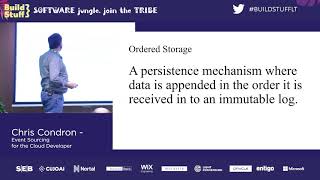 52mEvent Sourcing for the Cloud Developer
 27mPatterns for Event-Driven APIs