KubeVirt - making running virtual machines in a k8s cluster

summary
KubeVirt makes existing VMs first-class Kubernetes objects: disk images convert to raw and land in a PVC, QEMU/KVM runs the VM, and CDI upload proxy handles the import. Demo imports an old Windows XP image after manual driver and bus fixes, boots under KVM, exposes metrics to Prometheus/Grafana, supports snapshots and a successful live migration between nodes, while audio/VNC remains flaky. Project reports ~230+ contributors and ~800 forks and integrates with Rook/Ceph for block storage and CDI upload proxy for image ingestion.
AI-written summary · about
chapters (8)
- 0:00Introduction
- 1:00What is this about
- 3:20What is KubeVirt
- 5:20Preparing a virtual machine
- 10:30Demo environment
- 17:58Creating a snapshot
- 25:25My findings
- 26:42Questions
related talks
 43mMaking Running Virtual Machines in a Kubernetes Cluster a Mainstream Activity
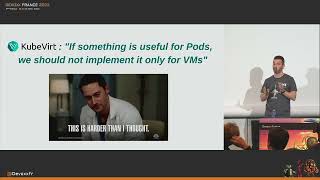 31mKubeVirt: What If Kubernetes Orchestrated Your VMs?
 38mKubeVirt Intro: Virtual Machine Management on Kubernetes
 25mKubeVirt: Converge IT infrastructure into one single Kubernetes platform
 43mKubeVirt - Kubernetes, Virtualization and Your Future Data Center
 30mKubeVirt: bringing virtual machines in a Kubernetes world
 31mKubeVirt: What if? What if We Could Create Virtual Machines in Our K8s Cluster?
 18mKubeVirt Alchemy: Transform VMs into K8s Workloads