Beyond the Prompt: How MCP Connects Language Models to Real Tools

summary
Explains the Model Context Protocol (MCP) as a modular, secure, open way to connect language models to real tools, data and apps to reduce integration chaos in agent systems. Shows concrete examples using Zed, Claude Desktop, WindSurf and Goose, demos of running an MCP server in TypeScript or Python, and integration with frameworks like LangGraph while covering prompts, tools, resources, sampling and composability for distributed autonomous LLM architectures.
AI-written summary · about
chapters (10)
- 0:00Introduction
- 10:19What are MCPs?
- 13:28MCP technical structure
- 21:39Demo: file system
- 27:22Demo: SQLite database
- 33:01Demo: custom API
- 38:41Demo: Ethereum scanner
- 40:53Auto-generation with Postman
- 41:56Additional resources
- 42:40Q&A
related talks
 33mThe Model Context Protocol: Connecting AI to Everything
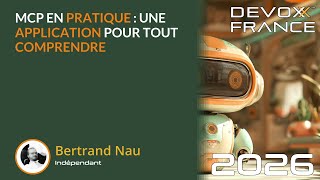 42mMCP in Practice: One App to Understand It All
 46mMCP for LLM Agents, Infrastructure APIs & Data Services
 32mMCP for dummies: Feed more context to LLM
 50mBeyond local tools: Dive into the Model Context Protocol (MCP)
 43mLLMs, Meet Your Tools: The Magic of Model Context Protocol
 45mModel Context Protocol (MCP): The future of user interactions?
 34mLLMs, Meet Your Tools: The Magic of Model Context Protocol