Ethics & AI: Identifying & preventing bias in predictive models

summary
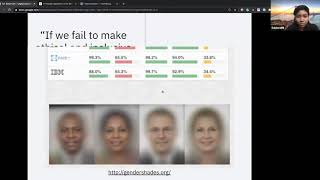
Explains concrete failures and fixes: Google Photos tags people as gorillas, Amazon Rekognition yields 28 false positives when matching Congress with a disproportionate 39% of false matches being people of color, and facial recognition error rates jump from ~1% for white men to 12–35% for darker-skinned women. Demonstrates tools and initiatives: IBM AI Fairness 360 (70 fairness metrics), Pymetrics for hiring, Upstart doubling eligible borrowers, and GDPR rights to explanation and anti‑profiling; argues for diverse teams, transparency, and automated bias tests before deployment.
AI-written summary · about
chapters (7)
- 0:00Start
- 14:36What's Being done Today?
- 26:46Diversity
- 27:32Awareness
- 28:15Regulation
- 28:44Transparency
- 29:34Testing and QA
related talks
 26m(Un)ethical Artificial Intelligence: How to Keep the AI Fair for Everyone
 40mEthical AI: Addressing Bias & Algorithmic Fairness
 38mSocial Implications of Bias in Machine Learning
 34m(Un)Ethical Machines? Why AI Bias Is a Problem and What to Do About It
 51mDigital Discrimination: Cognitive Bias in Machine Learning
 41mWhen AI Failures Reflect Our Own Social Biases
 37mKeynote: Ethical Machine Learning: Creating Fair Models in an Unjust World
 50mEthical Machine Learning