Hands-on Workshop: Network Policies - The Not-So-Hard Way

summary
Shows how Cilium built on eBPF enforces identity‑based networking (labels become identities) and inspects DNS and HTTP for precise rules. Live demo deploys a 3‑node kind/GKE lab, uses the Network Policy Editor and Hubble UI/CLI to create a DNS allow rule, tight L3/L4 policies (Port 80), then add L7 HTTP path rules, remove the initial allow‑all and observe zero unexpected drops while another namespace’s requests show denied verdicts.
AI-written summary · about
chapters (14)
- 0:00Network Policies workshop intro
- 1:22Cilium and eBPF technology
- 10:34Security risks and blast radius
- 13:27Designing and automating policies
- 14:10Live demo securing workloads
- 22:03Hands-on lab setup
- 27:28Deploying Cilium and apps
- 33:20Star Wars demo scenario
- 37:14Testing basic policies
- 41:14Network policy editor
- 45:07Least privilege with L7 policies
- 48:19Quiz on policy capabilities
- 49:24Summary and resources
- 52:17Q&A on Hubble and eBPF
related talks
 28mLessons from Building Scalable Network Policy Enforcement with eBPF
 35mNext-level Kubernetes Networking with Cilium - Nico Meisenzahl and Philip Welz
 05mLightning Talk: Unveiling 5 Essential Insights from Cilium Implementation in a...
 20mTackling Container Networking at Scale
 24mThe Cilium Story - Why We Created Cilium
 07mThe Cilium Vision
 09mWelcome + Opening Remarks
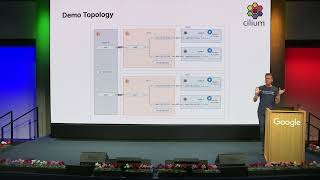 29mThe Swiss Army Knife of Cloud Native Networking