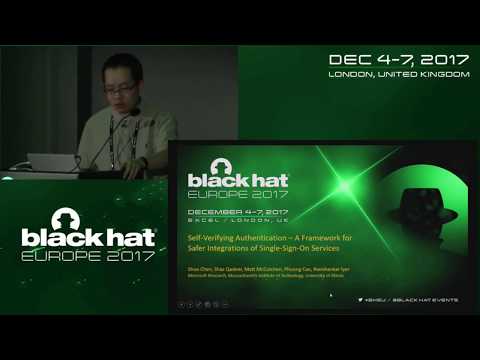
Self-Verifying Authentication – A Framework For Safer Integrations of Single-Sign-On Services
summary
Finds real SSO logic flaws (Azure AD nodejs identity spoof, Skype locking request forgery, OAuth access‑token misuse) and builds a runtime verification layer called SVX/SVAuth that extracts a symbolic transaction per execution, synthesizes a straight‑line program, submits it to a cloud prover (30–50s cold), and caches proved theorems for near‑zero overhead on repeat runs. Open source adapter supports 7 providers and 3 languages, integrates with MediaWiki in 8 lines and HotCRP in 21 lines, and can run in logging or enforcement modes.
AI-written summary · about
chapters (4)
- 0:00Start
- 20:55black hat Hurdles of traditional verification approach
- 28:55black hat Verifying an execution
- 45:39black hat Black Hat Sound Bytes
related talks
 21mVetting Single Sign-On SDK Implementations via Symbolic Reasoning
 46mSecure SSO Authentication: Strategies to Eliminate Vulnerabilities
 27mFrom AuthN to AuthZ: The Future of Identity
 41mBeginner’s Guide to Bypassing Modern Authentication Methods to SSO
 26mWho Authenticates Linux? Rethinking PAM & NSS in the Age of Cloud Identity
 50m.NET Rocks Live
 40mModern Single Sign-On: On the Security of Single Sign-On ...
 30mOMG WTF SSO: A Beginner’s Guide to Single Sign-On...