Raiden Glitching Framework

summary
Voltage glitching hardware and a low‑cost FPGA tool called Raiden use precise power/clock pulses to corrupt single instructions. Raiden runs on a Xilinx Artix-7 with a simple Verilog core and Python API, integrates with ChipWhisperer and FileWhisperer, and drives power/EMFI injectors. The team exploits a bounds check in the STM32 USB stack to leak up to 65,535 bytes of descriptor/adjacent memory, reproduces it reliably, and publishes code and a CVE.
AI-written summary · about
chapters (9)
- 0:00Introduction
- 2:18What is Raiden
- 6:28Inside Raiden
- 12:00Python API
- 17:16Writing Pins
- 19:31Raiden Applications
- 24:39Glitch Test
- 28:11USB Stack Security
- 36:13Testing
related talks
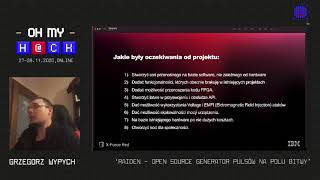 46mRaiden - open source pulse generator on the battlefield
 43mImplementing Practical Electrical Glitching Attacks
 46mChip.Fail - Glitching the Silicon of the Connected World
 21mGlitchGlück: Enabling Software Vulnerabilities through Guided Hardware Fault Injection
 04mBridging the Glitch Gap: Hash Salehi on Making Professional Fault Injection Accessible
 54mCLKscrew: Exposing The Perils of Security-Oblivious Energy Management
 48mFatal Fury on ESP32: Time to Release Hardware Exploits
 24mSecurity through Transparency: Tales from the RP2350 Hacking Challenge