Design, Build, and Run Sustainable APIs and Softwares
summary
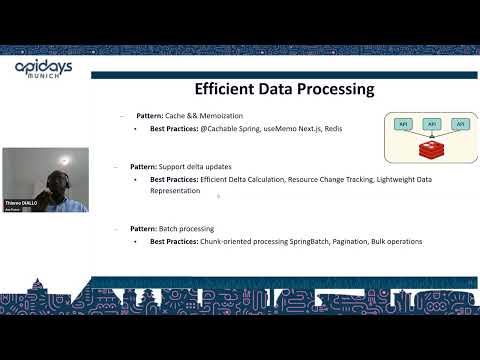
Measurement is the first step: use API Green Score at design time, a Sonar plugin (echo code / Creding0) during build, and Kepler at runtime to estimate cluster energy and carbon so teams can find hotspots and right‑size CPU/RAM. Apply concrete patterns — lazy loading, delta updates, batch requests, pagination, compression, HTTP/2, object pooling and caching — to cut network calls (ten requests → one) and repetitive CPU work. Combine autoscaling and scheduled shutdowns to reduce idle instances, then observe continuously and iterate on measured reductions.
AI-written summary · about
chapters (11)
- 0:00Sustainable API design
- 1:10Energy efficiency in APIs
- 2:36Green API measurement tools
- 5:50Energy-efficient design principles
- 8:14Efficient data processing
- 11:52Network traffic optimization
- 15:06Resource and DB optimization
- 16:32Green coding principles
- 19:01Energy-efficient hosting
- 20:53Observability and improvement
- 22:16Key takeaways
related talks
 33mDesigning Sustainable APIs
 15mHow Sustainable APIs Can Change the World
 31mGreen Architecture: Less Fat, More Impact, More Efficiency!
 24mSustainability APIs and making APIs sustainable
 26mHow to Build and Leverage APIs Sustainably to Reduce Digital Waste.
 31mBridging Product and Engineering for a Greener Future: Embedding Sustainability into Software Teams
 29mAccelerate API Innovation: Secrets to Staying Ahead
 49mBuilding Software Better: API Lifecycle Management for Developers