GovAPIs: Trends, Policies & Citizen Engagement

summary
Timeline traces from data.gov: thousands of datasets (2006) through 2010 rollouts like MyGov and UIDAI, GDPR (2015), to 2020 Singapore Health Data Hub and Estonia blockchain for voting and identity. Governments deploy REST APIs, HL7/FHIR standards, OAuth-style authentication and consent workflows, and AI for personalization and chat assistance. Case work includes a medicines API in Australia, My Health Record sharing with consented real‑time updates, and Singapore’s NHR pulling medication histories with full audit trails. Policies cited: GDPR, HIPAA, PDPA and national privacy principles.
AI-written summary · about
chapters (17)
- 0:00Government APIs & citizen engagement
- 1:11Historical evolution of government APIs worldwide
- 1:53Digital transformation in public services
- 2:36API regulations & challenges
- 3:17Core policies for API development
- 3:38API security & compliance frameworks
- 4:22GDPR & data privacy in APIs
- 5:06Building trust with secure APIs
- 5:26Standardized data formats
- 6:07AI in government services
- 6:48Blockchain in public sector
- 7:09API management best practices
- 7:52Citizen engagement via API subscriptions
- 8:12Successful API case studies
- 9:39API improvement feedback
- 10:21Digital government vision
- 10:42Question and answer session
related talks
 30mHow APIs Create Government-as-a-Platform
 35mAPIs for Governments: why, what and how
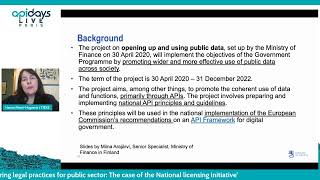 26mAPI data sharing legal practices for public sector
 29mPrivate Sector API Codesign PART II – Patrick Amarelis
 33mHealthcare Interoperability : From Buzzword to APIs
 22mAPIs: The Hidden Power Brokers in the EU Data Act Enforcement.
 22mAPI’s in public healthcare – case Health Village
 28mDigital Transformation in Governance