The unexamined bytes are not worth coding
summary
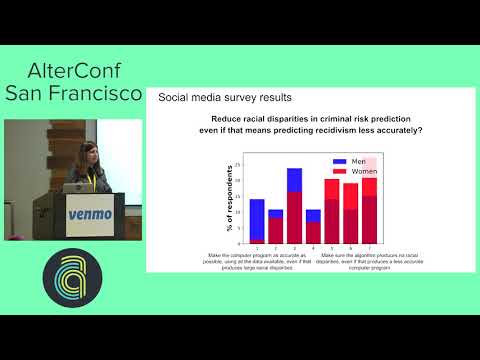
Shows that competing definitions of fairness — COMPAS conflict: false positive parity vs calibration — are mathematically incompatible in many real-world settings and therefore require value judgments, not just optimization. Uses statistical proofs, case studies, and surveys (initial social‑media sample then Google Consumer Surveys replication) and reports that gender correlates with accuracy vs disparity tradeoffs. Gives a concrete example: adding gender to a recommender raises accuracy but steers women away from science. Two of four survey questions reach significance.
AI-written summary · about
chapters (7)
- 0:00Introduction
- 1:25Algorithms and ethical dilemmas
- 1:56Case study Compass
- 3:30Northpoint rebuttal
- 5:39Diversity
- 8:18Results
- 9:08Another example
related talks
 40mQuestions and Practices to Make Algorithmic Decision Making More Fair
 28mMeasuring Model Fairness
 46mThe Measure and Mismeasure of Fairness
 41mMeasures and Mismeasures of Algorithmic Fairness
 50mThe Measure and Mismeasure of Fairness
 31mAvoiding Digital Bias
 13mCan AI design a fairer future?
 28mBreaking the Chains of Oppressive Software