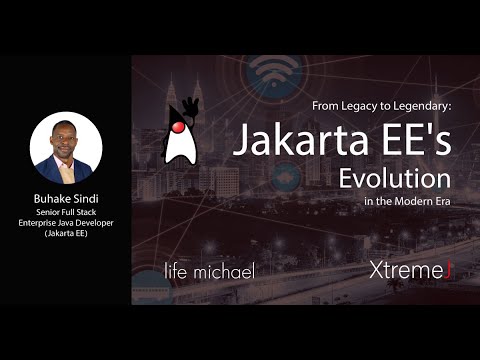
From Legacy to Legendary: Jakarta EE’s Evolution in the Modern Era
summary
Jakarta EE migrates from Oracle to the Eclipse Foundation with open governance and an open TCK, shifts namespaces (javax→jakarta) so migrations require automated tools like OpenRewrite or Eclipse Transformer, and adds Jakarta Data plus cloud‑native features; compatible runtimes (GlassFish, Payara, WildFly, Open Liberty) run the same app across Docker/Kubernetes. Example workflow: generate a project at start.jakarta.ee, run locally with Open Liberty hot reload, build a container and deploy. Jakarta now delivers three major releases in ~2–3 years and increases adoption for microservices.
AI-written summary · about
chapters (9)
- 0:00Introduction and speaker intro
- 2:10What is Jakarta EE
- 8:00Legacy foundation and evolution
- 12:39Transition to Jakarta EE
- 17:25Jakarta EE profiles and cloud native
- 21:05Getting started with Jakarta EE
- 27:14Contributing to Jakarta EE
- 29:42Demo and tools overview
- 31:29Q&A
related talks
 27mFrom Java EE to Jakarta EE: a user perspective
 34mJakarta EE: The Future of Cloud Native Java is Open!
 42mWhat's Going on With Jakarta EE
 51mModern and Lightweight Cloud Application Development with Java and Jakarta EE
 40mJakarta EE and Cloud Native Projects at Eclipse Foundation
 43mJakarta EE 9 and Beyond
 02h 38mJakarta in 2023, What Is the Situation?
 40mMigrating from Java EE to JakartaEE 10: Challenges and Opportunities