Authoring Domain Specific Languages in Spreadsheets Using XML Technologies
summary
Argues spreadsheets serve as editable DSLs and shows working XML toolchain: convert spreadsheet XML into a constrained tree model, drive 100 lines of XSLT or ~200 lines of XSLT to generate artifacts. Examples: generate Java classes, CSV exports (one project extracts 85 CSV columns), Graphviz diagrams and schema-to-schema XSLT. Systems run in production for six years with business users owning rules, reducing handoffs so business analysts edit spreadsheets and produce testable implementations without constant IT intervention.
AI-written summary · about
chapters (13)
- 0:00Introduction and motivation
- 2:50What are domain-specific languages
- 7:48Problems with business specifications
- 10:31Goal of DSLs in spreadsheets
- 12:18Business analysts and spreadsheets
- 14:04Why XML technologies fit
- 14:46XML success stories
- 17:13Extracting information from spreadsheets
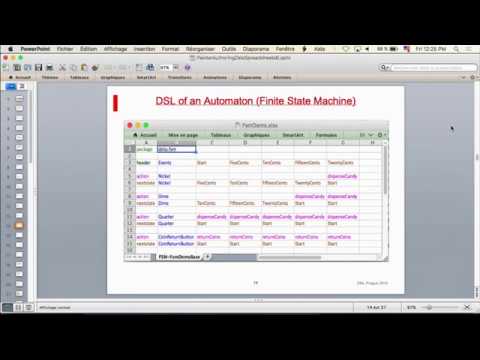
- 18:40Finite state machine example
- 21:55Banking instrument configuration
- 25:52Schema conversion case
- 27:16Conclusions and limitations
- 28:43Q&A session