SEO for AI: Be found by AI search apps like chatGPT

summary
Shows that AI assistants which aggregate models (examples: Monica, Bing, ChatGPT) cite sources users can click, so the concrete goal is to have AI use site content as a source. Uses structured data (recommendations: JSON-LD, microdata, RDFa from schema.org), homepage keyword coverage, meta descriptions as full conversational sentences, and hundreds of FAQs generated from AI to capture question phrasing. Gives a live example: an AI finds the nearest nail‑polish shop and links to sites; tagging detail (e.g., page counts, reviewer fields) puts a site into the AI’s database.
AI-written summary · about
chapters (14)
- 0:00Introduction and speaker background
- 2:58AI assistants and content sourcing
- 8:26How AI chatbots process information
- 13:20Machine learning and AI training
- 14:23Natural language understanding basics
- 19:55Structured data for AI SEO
- 24:38Keyword research for AI queries
- 27:10Optimizing meta tags and headers
- 30:42Microdata and schema.org tags
- 36:50Balancing detail in structured data
- 39:25AI tools for coding and content
- 41:15Semantic HTML and voice optimization
- 42:41Conversational content strategies
- 44:49Google My Business for AI
related talks
 25mBeyond SEO: Optimizing Your Web Content for the Age of AI
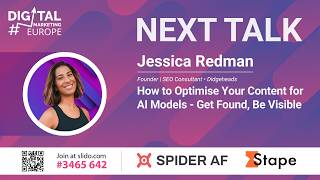 44mHow to Optimise Your Content for AI Models - Get Found, Be Visible
 45mTomorrow’s SEO: How AI is Reshaping Search
 44mAI in Digital Marketing: Benefits and Use Cases
 47mNavigating the SEO Landscape: Trends and Tactics
 27mBuilding AI applications: Successes and Lessons
 16mSolve for AI
 41mAI is here – time to throw away our search engines?