Faster, greener, and happier- why Quarkus should be your next tech stack

summary
Quarkus claims dramatic wins: JVM startup under one second and 15 ms native startup on GraalVM; memory and throughput improvements that allow 3x denser deployments in a microservice airline case; demos show live dev mode with continuous testing, hot reload, Panache persistence and Dev Services auto-provisions databases/Keycloak for local runs. Measurements use Intel RAPL and Teds dataset to estimate power and cloud carbon, finding Quarkus cuts carbon roughly in half compared to legacy Java stacks.
AI-written summary · about
chapters (19)
- 0:00Introduction
- 2:11Legacy Java problems
- 5:21Java in the cloud
- 8:12Quarkus solves it
- 9:17Startup time gains
- 11:50Startup speed matters?
- 12:33Memory savings
- 14:00Throughput benefits
- 15:28Performance gains
- 16:56Waste in Java
- 19:44Build-time optimizations
- 20:25Developer joy
- 21:31Live Quarkus demo
- 33:27Dev Services
- 36:59Quarkus magic
- 38:05Migration to Quarkus
- 39:33Sustainability impact
- 43:25Native vs JVM
- 44:05Summary
related talks
 48mWhy Quarkus Should Be Your Next Tech Stack: Faster, Greener & Happier
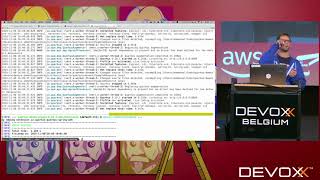 51mQuarkus why, how and what
 49mQuarkus, the Java Stack back from the Future
 52mQuarkus Supersonic Subatomic Java
 44mQuarkus: Supersonic Subatomic Java
 11mAll about Quarkus
 48mSupersonic, Subatomic Java with Quarkus
 46mQuarkus why, how and what