From "Can't" to "Can" with Kanto
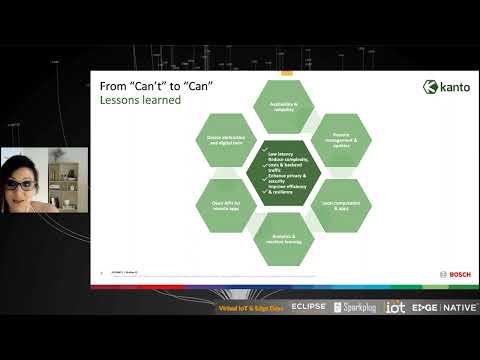
summary
Eclipse Kanto packages a lightweight edge runtime and manager that the team uses to provision a Raspberry Pi through Bosch IoT Suite, deploy three containers installed on Raspberry Pi (cookserver, a Python VSS connector, and a GPS feeder), and sync device state to a digital twin so VSS telemetry appears in the cloud. It relies on OSGi, MQTT, Vorto, Ditto, OCI/Moby and supports container orchestration APIs; a trimmed runtime reaches about 20 MB disk footprint and demos run successfully after a few hiccups.
AI-written summary · about
chapters (11)
- 0:00Start
- 2:05Digital transformation and challenges
- 4:09Experience is your best teacher OSGI
- 8:34Lessons learned
- 13:16Before green there was blue
- 17:00Adapting cloud-native technology for cloud-neutral edge
- 19:56Adopting open source and open standards
- 22:50Technology building blocks
- 25:30The big launch
- 26:39Creating value in the open source ecosystem
- 27:42Comming up next
related talks
 32mAn Eclipse Automotive Stack for rapid-prototyping Software Defined Vehicles
 35mManaging your vehicle software with Eclipse Kanto and Eclipse Leda
 29mWhy Eclipse Kura and Eclipse Kapua treat EdgeOps headaches better than ibuprofen?
 45mOpen Source, IoT, and the Big Monster
 54mImplementing IoT Architectures with Open Source
 42mRunning your private IoT Cloud Stack
 01h 02mEclipse IoT: State of the Union
 05mSolving Real-World Edge Challenges With K0s, NATS, and Raspberry Pi Clu...