Call of wild: extending terrestrial IoT networks
summary
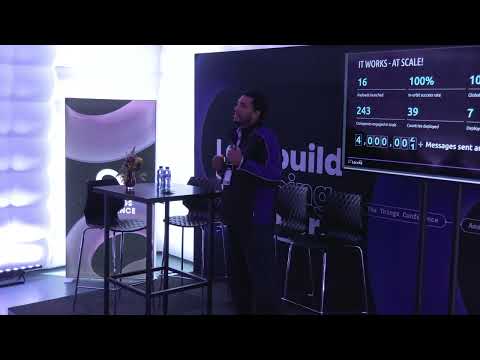
Lacuna’s lone whisper satellite IoT system claims 20× higher throughput versus first generation by switching to LR‑FHSS and spectrum‑use refinements and reports four million packets delivered overall. Six new satellites launch this year bringing 16 payloads and global coverage with four contacts a day and ~24‑hour delivery. Field builds include a river nutrient monitoring deployment that works where cellular and LoRa failed and a banana leaf humidity/temperature sensor network feeding AI. A payload sharing framework lets other operators fly compatible payloads and use the constellation from day one.
AI-written summary · about
chapters (10)
- 0:00Introduction
- 0:23Lacuna Space technology
- 1:47Satellite constellation evolution
- 2:30Spectrum management and LR FHSS
- 3:12Satellite launches and regulations
- 4:13Environmental monitoring applications
- 6:19Banana disease monitoring
- 8:06Network expansion model
- 9:51Q&A: throughput and coverage
- 10:56Q&A: payload integration and latency
related talks
 27mIs satellite IoT still a thing?
 24mBridging Technologies: Multi-Connectivity in IoT
 16mLPWAN trends and economic evaluation of satellite IoT solutions
 36mBuilding LPWAN Solutions that last for Years
 06mTelespor, why we chose LoRaWAN
 27mHow ecosystems plus LoRaWAN disrupt traditional business
 25mUpdate on 2.4Ghz LoRaWAN
 27mLessons learned through real world deployments