GraalVM for Polyglots: Harder, Better, Faster, Stronger?

summary
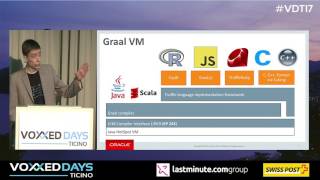
GraalVM promises real, measurable gains: the Graal compiler plus Truffle and LLVM-backed interpreters run Java, JavaScript, Ruby, Python and native C/C++ together via the polyglot API. Benchmarks shown claim up to ~5× throughput improvement, ~50× faster startup, and a memory example of 17MB vs 121MB versus HotSpot; native-image produces standalone binaries. Tooling includes Truffle, native-image, Chrome DevTools and JVisualVM integration, and compatibility with JVM ecosystems like Quercus/Quarkus for microservices.
AI-written summary · about
chapters (16)
- 0:00Introduction and welcome
- 2:39What is GraalVM
- 6:52GraalVM architecture overview
- 12:26Performance benefits of GraalVM
- 16:42Memory footprint and startup time
- 19:36Polyglot programming in GraalVM
- 21:29Running native languages on JVM
- 22:55Cross-language debugging tools
- 24:38Polyglot API for mixed code
- 25:00Extending native applications
- 25:42Polyglot in the database
- 28:36Installation and setup
- 29:00Benchmarking with JMH
- 33:36Performance comparison demo
- 34:22How to get started with GraalVM
- 36:11Conclusion and resources
related talks
 50mOne VM to Rule Them All
 33mNew Opportunities for Developers with GraalVM
 31mSimplifying and Optimizing Life on the Edge with Graal
 37mWhat Is This GraalVM Thing?
 48mOne VM To Rule Them All
 23mAdopting GraalVM
 29mGraalVM in a Nutshell
 59mSupercompilation, Partial Evaluation, Futamura Projections and How GraalVM Will Save the World