Intelligence and Machines: Creating Intelligent Machines By Modeling the Brain
summary
Claim: intelligence is the ability to learn a sensory‑motor model of the world by implementing neocortical principles. Implements sparse distributed representations and sequence memory in software, ships Grok (Numenta) and open‑sources NuPIC. Tests on streaming sensor data — factory power, video‑server load, windmill gearbox — show one‑step prediction and anomaly detection (Grok flags a gearbox fault) and customers report better forecasts than conventional models; 24‑hour forecasts use an added classifier on the cortical state.
AI-written summary · about
chapters (7)
- 0:00Start
- 5:38Warren McCulloch, Walter Pitts
- 25:33SDR Properti
- 27:55Sequence memory Theoretical constraints
- 35:50High Order Sequence Memory
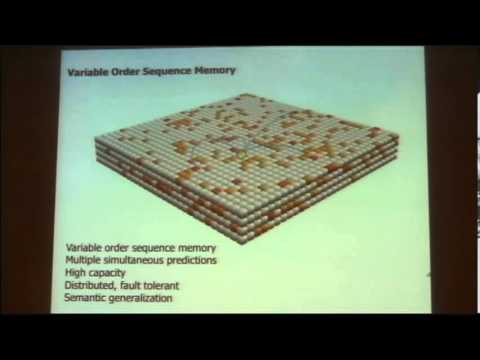
- 37:50Variable Order Sequence Memory
- 50:32Future of Machine Intelligence
related talks
 51mComputing like the Brain: the Path to Machine Intelligence
 31mAdapting to Change: How Machine Intelligences Adapt to a Changing World
 24mMachine Intelligence gets real
 43mThe Biological Path Towards Strong AI
 43mThe Role of TCS in Understanding (AI) Consciousness
 32mHow Neuroscience Makes AI Intelligent
 01h 01mTowards “Thinking Machines”
 41mArtificial Intelligence: Let's Think About Learning