A Short History of Python Web Frameworks
summary
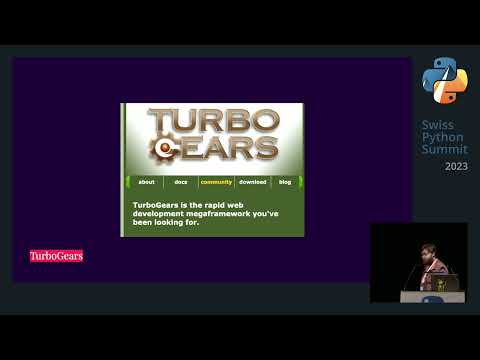
Timeline of real changes from CGI (1991) through WSGI → mod_wsgi/Gunicorn (2005–2010) to ASGI/Starlette → FastAPI (2018): early web used mod_cgi forking per request, Zope/Plone popularize object-publishing, CherryPy and TurboGears add app servers and ORMs, Django (2005) wins with auto-admin and quick adoption of WSGI, web.py powers YouTube, Flask (2010) succeeds with 450 lines, excellent docs and extensibility, Gunicorn brings worker greenlets, async needs spawn ASGI/Django Channels and Starlette, and FastAPI uses type hints for validation and high performance.
AI-written summary · about
chapters (25)
- 0:00Introduction and speaker setup
- 1:08Procrastination and talk origins
- 1:51HTTP evolution from 0.9 to 1.1
- 3:15Dynamic content with CGI
- 4:39Zope framework launch in 1999
- 6:04Zope 2 and 3 architecture shift
- 7:51Kwote and Webware frameworks
- 8:55Java servlets and WebKit
- 11:24Modern stack terminology
- 12:05WSGI revolution and simplicity
- 13:08CherryPy and early Python frameworks
- 14:10TurboGears and Rails influence
- 16:40Django's rise and admin interface
- 18:04Web.py and minimalist frameworks
- 19:12Pylons and ecosystem flexibility
- 19:52ModWSGI and production adoption
- 20:36Web2Py and online editor
- 20:56Bottle and micro frameworks
- 21:17Tornado and long-lived connections
- 21:39Flask's success factors
- 22:00Gunicorn and Django Channels
- 22:42ASGI and Starlette impact
- 23:03FastAPI and type hints
- 23:24Legacy and community responsibility
- 24:05Q&A session begins