On Progressive Disclosure in Swift

summary
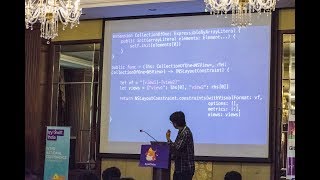
Swift deliberately layers complexity so beginners use strings, arrays and optionals while advanced users opt into generics, concurrency and ownership. It shows why property wrappers felt like magic and how macros with inline expansion fix that by exposing generated code in the IDE. Compiler diagnostics link to docs (docs.swift.org) for guided error recovery. New features include typed throws to avoid heap allocations in embedded contexts and non-copyable types with optional retrofitting; rethrows semantics remain a compatibility dilemma.
AI-written summary · about
chapters (17)
- 0:00Introduction to progressive disclosure
- 2:33What is progressive disclosure
- 7:13Why Swift uses progressive disclosure
- 11:43Simple vs complex solutions
- 13:10Progressive disclosure in Swift code
- 14:57Peeling back layers of optionals
- 17:49Exploring Swift’s standard library
- 19:58Progressive disclosure and play
- 21:19Failure modes in progressive disclosure
- 24:08Fixing property wrappers with macros
- 27:19Accidental disclosure in error messages
- 30:29Avoiding steep climbs in learning
- 35:06Swift’s growth and new challenges
- 37:36Case study: Type throws in Swift
- 46:47Non-copyable types in Swift
- 53:05Future of progressive disclosure
- 54:50Q&A on concurrency and macros