Experimenting in a Sociotechnical System

summary
Makes the concrete claim that observability needs tracing over logs and structured logs, using Honeycomb-style tracing to turn noisy clues into zoomable pictures of live systems. Frames teams plus running code as a software-as-learning-system, where changes are experiments: state a falsifiable theory, run it, measure. Gives examples: learned Swift over a weekend, built a Python/Flask lunch-order service, hunted a two-week bug caused by mixing user_id with the primary key, and shows how tracing and experiments found and fixed it.
AI-written summary · about
chapters (7)
- 0:00Introduction and welcome
- 1:48From programming to sociotechnical systems
- 5:00Learning in sociotechnical systems
- 7:31Experiments and scientific thinking
- 10:09Debugging and real-world learning
- 12:15Preparing the closing keynote
- 14:02Sharing experiments as science
related talks
 37mBetter Reliability Through Observability and Experimentation
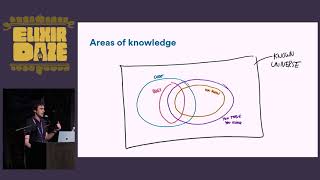 45mKeynote: The Hitchhiker’s Guide to the Unexpected
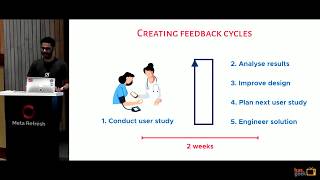 36m"Engineering to embrace change" Or "How clumsy engineering can lead to powerful research – Part II"
 51mLeadership observability: explaining our workings for ourselves & others
 30mBuilding the systems that build the software
 44mUnderstanding Teams Through Systems Thinking and Stories
 33mHuman System Design Testing
 43mBetter Software Development Systems through Stress