If only I owned my data: Architecting decentralized data

summary
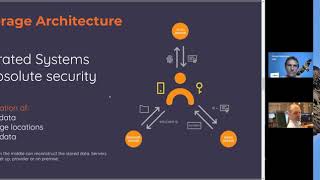
Slides argue a concrete architecture: decouple identity, storage, access and ML so users keep keys and move data; cite working pieces like did standards and Solid pods, encryption toolchains (Signal protocol, Vault, HSMs, OPA) and privacy ML (Federated learning, TF Encrypted / secure MPC). Examples include a retro Groove peer-to-peer proof-of-concept and a Thoughtworks DID prototype for Singapore, so this is practical tooling and prototypes not just theory.
AI-written summary · about
chapters (13)
- 0:00Decentralized data architecture
- 5:30Groove’s peer-to-peer architecture
- 12:13Cloud and hardware silos
- 14:22Picasso’s design principles
- 16:49Putting users first
- 20:00Decoupling identity
- 23:12Decentralizing apps with standards
- 24:39Decoupling storage access
- 30:38User-controlled ML
- 32:49Next steps
- 39:56Identity and access steps
- 42:23GDPR rights
- 43:04Human-centric vision
related talks
 01h 15mKeynote: Feeling the Local-First Elephant: A Roadmap, Hidden Gems, and New Puzzles...
 21mTowards Building a Responsible Data Economy
 16mData Ownership – Basic building block of privacy
 33mRe-Decentralizing the Web and recapturing our data
 27mCreate Value and Insight Through Privacy-preserving Data Collaboration [...]
 16mPrivacy by Design for JavaScript Data Systems
 31mEthics and Data Science
 15mKeynote on Building a Network for Privacy-Preserving DeFi