How Rust Makes Advanced Type Systems Accessible to the Masses

summary
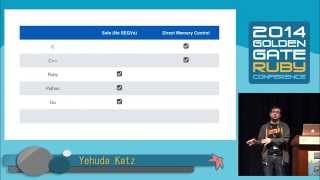
Rust claims compile-time guarantees of memory safety and absence of data races, using a borrow-and-ownership type discipline that rejects unsafe programs before they run. The language pairs C/C++ speed with Java-like safety and expressive types that let many correctness properties become unrepresentable if wrong. Adoption shows up concretely: development began in 2006 with stable 1.0 in 2015, and Rust tops StackOverflow most loved 2016 and 2017 while many companies run Rust in production.
AI-written summary · about
chapters (10)
- 0:00Introduction
- 0:30Python
- 1:21Python Interpreter
- 2:31What are types
- 3:22You dont need a type checker
- 4:31Statically typed languages
- 5:35Rust
- 6:27Type Systems
- 9:42Adoption
- 10:13Conclusion