How Stripe Invests in Technical Infrastructure
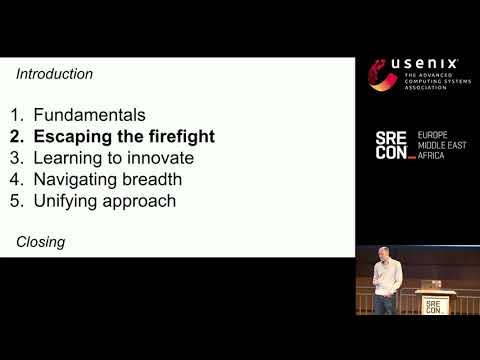
summary
Defines infrastructure as any tool used by three-plus teams for business-critical work and gives concrete tactics: shard MongoDB, script-kill long queries, add static analysis so every query requires an index hint. Builds Sorbet (a Ruby static-typing tool) and reaches 80% of Ruby code statically typed in under two years. Moves an ML training platform (Railyard) onto Kubernetes, runs continuous load against production, prototypes cheaply, test hardest cases early, and budgets 40/30/30 user asks / platform quality / key initiatives.
AI-written summary · about
chapters (31)
- 0:00Intro
- 1:11How do you prioritize infrastructure investment
- 2:43What is technical infrastructure
- 6:18The continuum
- 7:44Shortterm vs longterm
- 9:00Firefighting
- 10:06Stuck firefighting
- 11:28MongoDB
- 13:00No standing still
- 13:31How to fix it
- 15:29Reduce concurrent work
- 16:28Automate tasks
- 17:59Creativity
- 19:33Courage
- 20:15Innovation
- 22:09Benchmarking
- 24:47sorbet
- 26:02place what to do
- 26:46prioritize
- 28:18moving to Kubernetes
- 29:16the wrong solution
- 30:29validate your approach
- 33:55Railyard
- 34:14Fool me once
- 35:05Load generation team
- 35:44Infrastructure properties
- 37:12Forced Long Term Work
- 37:48Do We Actually Do Now
- 38:10Investment Strategy
- 39:47Questions
- 40:22Team Structure
related talks
 29mLessons From A Rails Infrastructure Team
 30mInfrastructure As Data
 54mBuilding and Managing a Ruby Infrastructure
 42mBranchstack: branching infra for better development
 35mSRE -- culture and strategy @ TrustingSocial
 11mFrom init to deploy in 30 minutes - Ship 26 NYC Workshop
 43mFast and Furious: Startup scaling with Kubernetes
 25mInfrastructure Tasks in the Company