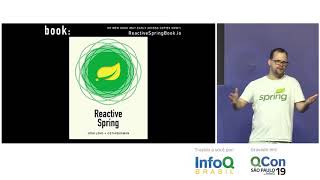
How to build Reactive Server in 50 minutes

summary
Shows that a plain thread‑per‑socket Java server runs out of memory when an 10,000 connections DOS tool spawns threads, then rebuilds the engine on NIO + Project Reactor. Implementation uses selectors, per‑connection reactive wrappers, a custom ByteBuffer Subscriber, and Schedulers.parallel with onBackpressureLatest to avoid publishOn queue overflow. Demo exposes an overflow bug, then a fix; the reactive version sustains thousands of concurrent TCP streams and demonstrates byte‑level backpressure working end‑to‑end.
AI-written summary · about
chapters (32)
- 0:00Introduction
- 0:28Who this talk is for
- 1:19About me
- 1:58Discounts
- 2:33Reactive Server Engine
- 3:54Code perspective
- 5:19Why do we need Reactive Server
- 11:38Drawbacks of blocking
- 12:27Nonblocking IO
- 18:22Summary
- 19:25Backpressure
- 19:39Reactive Factory
- 19:49Run from Complexity
- 20:03Reactive Streams
- 20:34Project Tractor
- 20:54Kill Java
- 21:13Reactive API
- 27:58Register listener
- 28:10Read updates
- 29:04Listening
- 29:43Dont subscribe
- 30:39Cancel action
- 31:45Handle operator
- 32:32Datasend
- 33:14Garbage Collector
- 34:01WhoUnsubscribe
- 34:50Execution Flow
- 35:24Corner Cases
- 36:07Interaction
- 37:10Read
- 37:48Subscribe
- 41:47Debug