Crossing Learning Thresholds Progressively via Active Learning
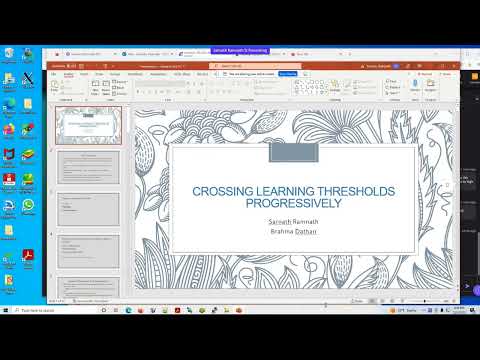
summary
Course redesign treats modeling and substitutability as threshold concepts and spirals them from base to intermediate (mastery left to capstone) using structured requirement templates, case studies and active learning. Concrete artifacts include a microwave FSM example that demonstrates parsing requirements into states/events, a Library use‑case → design → implementation pipeline, and the counter vs counter_sub demo that exposes LSP violations. About 19 activities run across the semester, with 3–4 tied to substitutability; the approach is implemented in classroom materials and a textbook chapter and reports improved student grasp.
AI-written summary · about
chapters (15)
- 0:00Introduction
- 3:17Why these topics matter
- 6:04Threshold concepts role
- 8:36Best practices for thresholds
- 10:08Designing progressive activities
- 13:40Teaching modeling in stages
- 16:57Intermediate modeling with cases
- 19:32Challenges in FSM teaching
- 24:18Reflection and modeling activities
- 24:39Progressive substitutability
- 25:43LSP base activity
- 28:34Preconditions and postconditions
- 30:03LSP in Java examples
- 31:04Q&A on LSP
- 33:14Active learning social component
related talks
 01h 16mPL and HCI: Better Together
 16mAdvancing UX Education: A Model for Integrated Studio Pedagogy
 57mHow Metacognitive Practices Advance Inclusive Learning
 49mHolistic Inclusive Learning Experiences: Beyond Compliance
 03mA Game Design Approach to Failure to Enhance Learning Games
 27mOperationalizing the Integration of User Interaction Specifications in Modeling Editor Synthesis
 15mStudents' Achievement of Personalized Learning Objectives in MOOCs
 13mInteractive Learning and User‑Centered AI: A Retrospective