Domain Pattern – How the Domain Influences the Architecture

summary
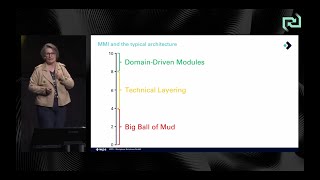
Introduces a practical decomposition method called domain driven transformation with four steps: domain rediscovery via domain stories, model the to‑be, align the as‑is codebase, and execute the refactor. Identifies three concrete domain patterns — pipeline, blackboard, dialogue — and shows why some domains are easy to split while others resist: form/CRUD models and central work items (example: container-centric systems) entangle behavior into UI or single classes, producing problems like a 463-class entangled cycle measured by a modular maturity index. Demonstrates software can both drive and lag domain evolution (construction coordination case).
AI-written summary · about
chapters (4)
- 0:00Intro
- 0:53Session "Domain Pattern – How the Domain Influences the Architecture" by Carola Lilienthal
- 47:08Carola answers questions from the audience
- 48:11Outro
related talks
 51mDomain - Driven Transformation
 47mDomain Driven Transformation—How to Bring Back Sustainable Architecture to
 38mDomain-Driven Transformation - how to improve the structure of legacy systems
 43mArchitecture antipatterns and how to beat them 1/2
 55mDomain-Driven Design: back to the roots
 38mWhat I talk about when I talk about Domain Driven design
 48mDomain-Driven Design tactically and practically
 59mDomain-Driven Design - Where Rubber Meets the Road