Invisible Infiltration of AI Supply Chains: Protective Measures from Adversari...
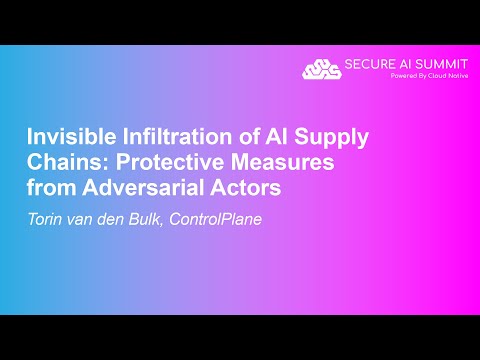
summary
Threat modeling of an intentionally reductionist RAG reference architecture uncovers five concrete risks: proprietary data leaked to external SAS inference, vector store access compromise, chat app/API takeover, hallucinations, and non‑deterministic outputs. Practical mitigations include embedding unique identifiers and canaries for leak detection, input anonymization and filtering before embedding, an LLM-as-judge layer for prompt‑injection defense, drift and anomaly detection for observability, and application‑level acceptance testing. A deployable AI security reference architecture (air‑gapped and cloud variants) is being built and tested with FINOS, TAG/Kubeflow findings, Helix testify SEC and flux.
AI-written summary · about
chapters (11)
- 0:00AI supply chain threats
- 3:15AI security motivation
- 9:58AI threat landscape
- 14:57Finos AI governance goals
- 17:44Threat model scope
- 20:11LLM app architecture
- 22:20Key threats and controls
- 26:56Mitigation strategies
- 31:06AI security resources
- 32:13Next steps and architecture
- 33:18Closing remarks
related talks
 42mSecuring the Invisible
 12mSecuring AI-Driven Finance
 40mSecuring Generative AI: Is it all an Illusion?
 30mNavigating the New AI Security Landscape
 14mAI Sprawl: The Hidden Risk Threatening Your Enterprise Now
 31mSecuring the Future: Navigating AI Vulnerabilities and Evolving Security Practices
 37mFundamentals of AI safety and security
 50mBuilding AI Security In: MLSecOps in Practice