Networking challenges in the MeerKAT radio telescope
summary
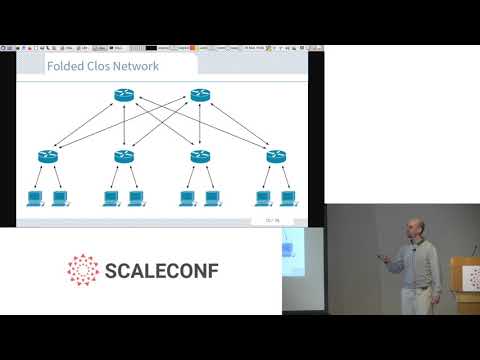
MeerKAT generates about 2.2 TB/s raw at the correlator which reduces to ~70 Gb/s then 5.4 Gb/s to disk; to move that data a custom folded Clos network of 648 ports and expensive fiber is used. The pipeline relies on UDP multicast, required multicast steering round-robin to balance 32k frequency channels, and FPGA timing jitter fixes plus NIC and kernel tuning to avoid per-port buffer overruns. Monitoring is Prometheus-driven and the design works in production.
AI-written summary · about
chapters (14)
- 0:00Introduction to MeerKAT
- 1:04Data flow in MeerKAT
- 3:14Networking infrastructure design
- 5:41Folded Clos network solution
- 7:52Multicast in MeerKAT
- 10:02Challenges with multicast UDP
- 11:29Load balancing issues
- 13:56Buffer overflow problems
- 17:11Network monitoring tools
- 21:01Host-side data handling
- 21:44Optimizing packet reception
- 25:59NUMA and network tuning
- 28:06Hardware limitations
- 30:20Q&A session