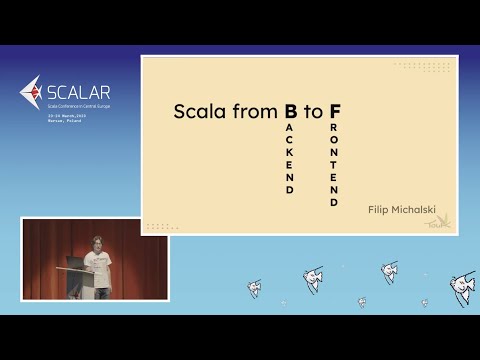
SCALA FROM B TO F - BACKEND DEVELOPER ON FRONTEND
summary
Scala.js compiles Scala to JavaScript and the demo shows sbt + fastLink producing a working JS bundle, a HelloWorld, exported validation functions callable from plain JS, React facades (scalajs-bundler + npm) with a toast example, and a cross-project setup that shares case classes and Tapir endpoints so backend and frontend use the same types. Laminar is used for UI streams and a simple shopping list; it works well for internal admin apps but complex browser hacks (rich editors) still require JS work and hiring Scala frontend devs is costly.
AI-written summary · about
chapters (16)
- 0:00Introduction
- 2:09Frontend backend divide
- 4:38Scala.js and why it matters
- 6:24Basic setup and first example
- 7:49Sharing backend logic
- 9:13JavaScript libraries in Scala.js
- 10:36React with Scala.js
- 13:29React facades and type safety
- 16:23Alternative frontend frameworks
- 17:06Cross-project compilation
- 18:29Example with Tapir and Laminar
- 21:03Laminar components and signals
- 22:29Benefits of shared models
- 23:57Avoiding duplicated logic
- 25:22When to use Scala.js
- 26:47Q&A
related talks
 31mSCALAJS - WEB WITHOUT PAIN OF JAVASCRIPT
 29mFull Stack Scala Web Application.
 56mScala.js: Safety and Sanity in the Wild West of Web development
 50mFull stack Scala
 31mHow I learned to stop worrying and love the frontend
 45mINTEGRATING SCALA.JS INTO AN EXISTING FULL STACK APP
 20mQuickly develop web applications with the FastScala framework
 57mReact to ScalaJS