Cloud Native Akka & Kubernetes The Holy Grail To Elasticity
summary
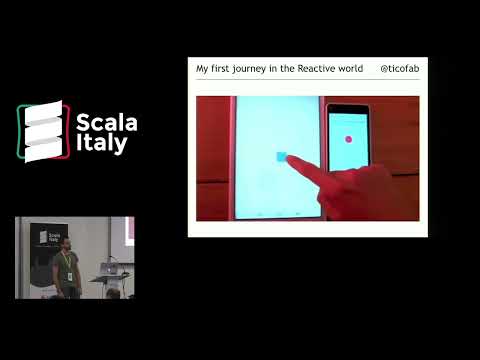
A small system uses an Akka cluster with one seed JVM running a master and many worker JVMs packed one-per-pod; a custom Kubernetes controller calls the Kubernetes API to increase or decrease Deployment replicas on demand. A websocket frontend plots queue length, burn rate and throughput while autoscaling adds and kills pods to keep burn rate near zero. The demo runs live, shows rapid scale-up/scale-down, and highlights issues around node restarts and Akka cluster rejoining for 10 million phones style workloads.
AI-written summary · about
chapters (13)
- 0:00Introduction and speaker intro
- 2:12Reactive Manifesto and elasticity
- 5:25Personal story with reactive systems
- 9:12Actor model and location transparency
- 11:37Scaling controller concept
- 14:08Kubernetes and Docker integration
- 17:19Code walkthrough and architecture
- 22:55Live demo setup and execution
- 28:19Demo results and analysis
- 31:10Actor messaging vs HTTP performance
- 32:13GitHub repository and resources
- 32:57Conclusion and Holy Grail discussion
- 33:39Q&A session
related talks
 22mAdvanced Akka features
 34mAutoscaling Made Easy with Kubernetes Event-Driven Autoscaling (KEDA)
 29mAlice and the lost pod: practical guide to Kubernetes in Scala
 45mScala meets Kubernetes
 24mShaping Tomorrow's Technology: Navigating Cloud-Native, Serverless, and Polyglot Programming
 31mScaling Your Cluster (Both Ways)
 44mInner Development Loop with Java on Kubernetes
 38mScaling EDA Workloads with Kubernetes, KEDA & Karpenter