A Birds eye view of the Scala ecosystem
summary
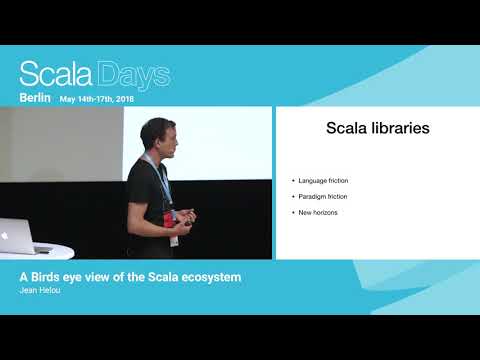
Maps where to look and what actually works: prefer Scala libraries first to avoid language friction, fall back to Java when proven, and wrap rather than rewrite when API or mutability semantics clash. Notes a surprising fragmentation in JSON — 69 JSON libraries — and contrasting SQL approaches (Anorm strings, Slick, Doobie macros). Tooling defaults to SBT but SBT moves slowly; Ensime and LSP + Visual Studio Code are viable. Dotty/Scala 3 promises TASTy-based interop yet creates a short-term two-language maintenance burden.
AI-written summary · about
chapters (31)
- 0:00Introduction
- 2:02Why Scala
- 3:45Scala landscape
- 4:16Scala library ecosystem
- 5:18Scala vs Java libraries
- 8:19When to look at Scala libraries
- 14:15Choice of a load
- 14:42My rules
- 15:37Investigating Scala libraries
- 17:53The power of Scala
- 23:42Interacting with SQL
- 27:28Versions
- 28:39Tooling
- 29:24Editor
- 29:37Scala IDE
- 30:07IntelliJ IDEA
- 30:48Language Server Protocol
- 31:04Integrations
- 31:45IDE support
- 32:39SBT
- 34:31SBTA
- 34:59Scala communities
- 35:33Scalaorg
- 37:12TypeLevel
- 38:17Local Communities
- 40:08Scala conferences
- 40:58Scala rifts
- 41:37Scala to 12
- 44:19tooling changes
- 44:41end of presentation
- 45:17QA