Architecture of hanami applications
summary
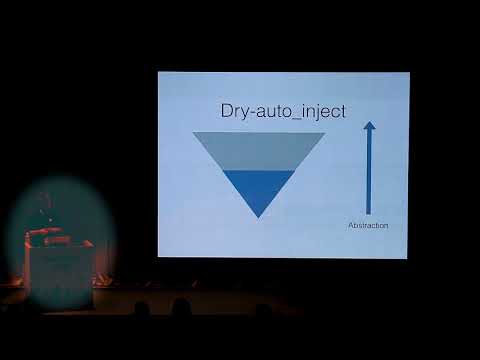
Argues that long‑term maintenance comes from isolating business logic into small functional objects and separate Hanami applications, using dry-container and dry-auto_inject to avoid global state and speed testing, and using dry-system dependency booting to initialize/close shared resources. Recommends repositories and change sets for complex persistence, shows a working setup at a company using ROM and multiple Hanami apps, and outlines an event log + consumers pattern (Kafka or event store, Hanami‑event POC) for scalable state projection.
AI-written summary · about
chapters (18)
- 0:00Introduction and welcome
- 2:36Why this talk exists
- 3:45What is good architecture
- 5:32Real Rails problems
- 6:59Functional objects in Hanami
- 9:06Dependency injection benefits
- 11:14Containers and dry-container
- 12:47Dry auto-inject explained
- 13:32Models and repositories
- 15:43Multiple Rails apps problem
- 17:10Hanami applications structure
- 18:41Advanced architecture with dry-system
- 20:47Introduction to DDD
- 22:14Domains in Hanami projects
- 23:39Event-driven architecture
- 24:23What is event sourcing
- 27:56Event sourcing pros and cons
- 29:00Conclusions and key takeaways
related talks
 39mSlicing and Dicing Through Complexity with Hanami
 31mHanami 2: New Framework, New You
 01h 29mArchitecture Beyond Clean & Hexagonal
 47mLivin’ La Vida Hanami
 57mSimplify Your Architecture: Events and Publishing
 47mGive Your Application Memories
 47mHexagonal Architecture in Practice, Live Coding That Will Make Your Applications More Sustainable
 33mFrom Enterprise Architecture to Software Design - Critical Thinking