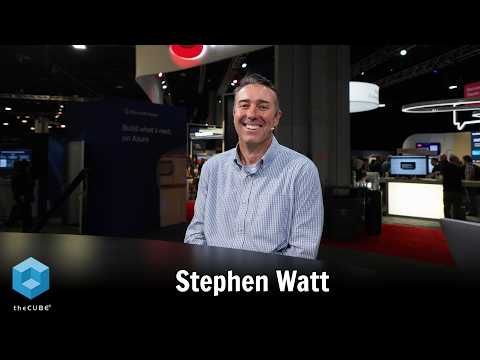
Stephen Watt, Red Hat | Red Hat Summit 2026
summary
Argues that starting on frontier providers like OpenAI makes sense but at scale token economics force migration, citing that roughly 5% of GPUs are fully utilized; demonstrates an open source approach using the vLLM Semantic Router to route requests to specialized open-weight models for better cost and latency; shows a sandbox called TankOS built on an immutable OS (bootc) and rootless Podman/OpenClaw to limit agent damage; describes an internal agentic harness that replaces manual idea-review and ongoing work on vLLM-Omni and CPU inference.
AI-written summary · about
chapters (11)
- 0:00Welcome to Red Hat Summit
- 0:48Meet Steven Watt
- 1:53Multi-agent systems future
- 3:41Agentic paradox explained
- 5:55AI workload efficiency
- 7:41OpenShift AI platform
- 9:05Semantic router benefits
- 10:29Agent risks and guardrails
- 12:40Process automation vs optimization
- 15:48Future AI innovations
- 18:17Closing remarks