What does PEP 517 mean for packaging
summary
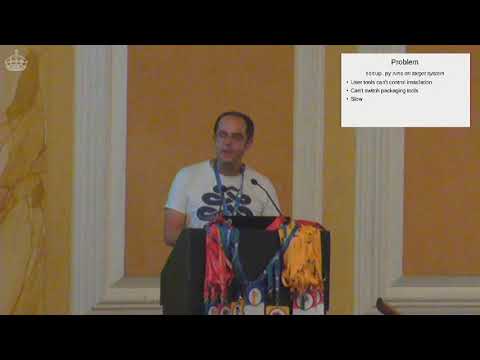
PEP 517 introduces a concrete Python hook API so frontends build wheels by calling a package’s declared build-backend in pyproject.toml, replacing running arbitrary setup.py during install. Five hooks exist (two mandatory, notably build_wheel and get_requires_for_build_wheel), letting tools like pip build and cache wheels while backends like flit, setuptools, or nscons handle source-to-wheel work. The spec and ecosystem effort span ~800+ mailing-list messages and almost two years of design; a pep517 helper library already isolates hook execution.
AI-written summary · about
chapters (11)
- 0:00Intro
- 0:59Python packaging history
- 3:15PiPi history
- 6:56Easy Install history
- 8:40Setup Drop PI
- 11:00Wheel Package Format
- 13:13Wheel Package Flow
- 14:57Pi Project Tamil
- 16:00PEP 517
- 18:28PEP 517 definition
- 20:11PEP 517 tools
related talks
 23mPackaging Python in 2021
 25mInside the Cheeseshop: How Python Packaging Works
 29mHow we standardized editable installs PEP 660 vs PEP 662
 02h 36mPython Packaging Demystified
 17mHow Python Evolves: The Role of Python Enhancement Proposals (PEPs)
 30mThe Evolutionary Saga of Python Packaging
 30mPython Steering Council
 36mPython Packaging from Init to Deploy