Automation with Ansible and Containers

summary
Ansible is used to automate an OpenShift cluster installer by declaring inventories (masters, nodes, etc.), running playbooks that use docker connection instead of SSH to start and stop containers, and executing modules like docker_container to create three containers per play. The workflow simulates start 100 containers on one laptop to test clusters faster than VMs, and extends Ansible by writing Python modules and plugins (action, callback, connection) so diagnostics run on targets and report all failures instead of stopping at the first.
AI-written summary · about
chapters (12)
- 0:00Intro
- 0:44What is Ansible
- 2:26Rodolfos story
- 4:20The basics
- 13:44Danceable playbook
- 16:17Remove containers
- 18:07Modules
- 18:39Docker Container
- 19:03Roles
- 22:08Python
- 23:17Writing modules
- 30:46Questions
related talks
 29mAnsible Automation Platform based on OpenShift
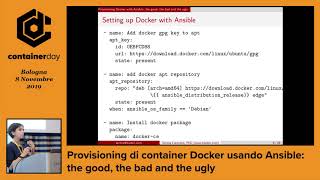 33mProvisioning Docker Containers Using Ansible: The Good, the Bad and the Ugly
 31mAutomate Openshift Cluster deployment with RHACM and AAP
 39mImprove Container Management with Event-Driven Ansible
 13mAutomate your applications with Podman and Ansible
 39mContinuous Deployment with Ansible
 18mAnsible and buildah will rock your containers
 23mAnsible with Edge Computing