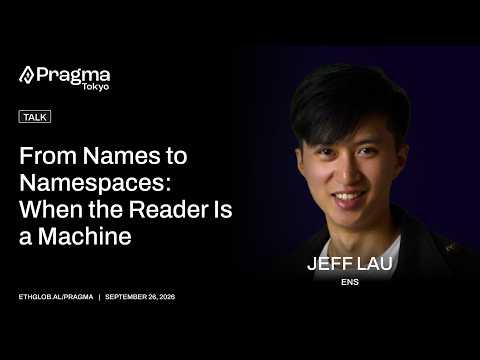
From Names to Namespaces: When the Reader Is a Machine
summary
ENS extends human names into verifiable machine-readable namespaces: ENSv2 adds per-name registries, delegated issuance and constrained roles, and expirations so a company can mint thousands of short-lived agent names without handing over broad control. Example: Jack Butcher’s X Money drop used a public name so wallets could verify which contract belonged to him; about 7,000 buyers and ~25,000 wallets relied on that proof. Use cases include job123.research.company.eth keys that expire, provider endpoints and subscription terms published on-chain, and auditable requests tied to named agents.
AI-written summary · about
chapters (17)
- 0:00Introduction and the Purpose of Names
- 1:37Blockchains Turned Addresses Into Identity
- 2:17How ENS Added Names to Ethereum
- 2:54Ownership and Verifiable Naming
- 3:20What Centralized Names Can Lose
- 5:01Machines Are Becoming Economic Actors
- 6:24Names as Structured Inputs
- 6:48Jack Butcher and Verifiable Provenance
- 8:02Brands, Reputation, and Chains of Trust
- 9:21Namespaces Work Like Company Email
- 10:15Trusting Roots Across Thousands of Agents
- 10:49Identity and Context for Agent Services
- 11:13Agent Payments and Company Subscriptions
- 13:16The Missing Conventions for Agent Names
- 14:05ENSv2 Delegation and Constrained Roles
- 15:52Three Actions Builders Can Take Today
- 16:40Durable Names for Short-Lived Machines