Mental Health Mentoring for PL Students

summary
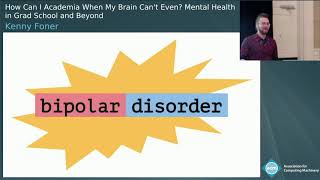
Shows concrete claims and tools: cites 50%+ of PhD students meeting diagnostic criteria and up to 20% undergrads self‑harm during COVID, uses the biopsychosocial model plus CBT and DBT frameworks, and applies the minority‑stress model to international and marginalized students. Recommends actionable steps — hydration, sleep, diet, walking, meds trialing, planned social contact, mentoring workshops, accessible therapists and translators, and institutional changes like supportive advising, living wages and worker rights.
AI-written summary · about
chapters (11)
- 0:00Introduction
- 1:46Mental health basics
- 5:17Mental health in academia
- 9:32Mental health spectrum and stigma
- 17:22Biopsychosocial model
- 25:03Psychological skills and therapies
- 31:01Social support and isolation
- 36:36Quality relationships
- 39:01Minority stress and barriers
- 44:40Student rights and action
- 46:27Conclusion and Q&A
related talks
 01h 05mHow Can I Academia When My Brain Can't Even? Mental Health in Grad School and Beyond
 44mHow Can I Academia When My Brain Can't Even? Mental Health in Grad School and Beyond
 46mHow Can I Academia When My Brain Can't Even? Mental Health in Grad School and Beyond
 01h 04mLet’s Talk About Mental Health
 34mEmpathy as a Service: Supporting Mental Health in Tech
 48mWIP: Debugging Depression
 46mBuilding a more effective, bidirectional mentor-...
 50mThe Transformation of Post Pandemic Mental Health