Open Source is Good for Business
summary
Open source delivers concrete business wins: 89% of UK firms already use it and it speeds innovation while improving security. Inventory code, produce an SBOM (use SPDX), and adopt clear contribution and publishing policies so engineers can legally fix bugs, submit docs and push integrations as part of work. Use OpenSSF tooling and education, consider commercial options like Tidelift or join the PHP Foundation and OpenUK to fund and stabilize critical dependencies.
AI-written summary · about
chapters (12)
- 0:00Open Source is Good for Business
- 1:38Open Source License must meet open source definition
- 3:38Business priorities Innovation and security
- 9:27Open source myths
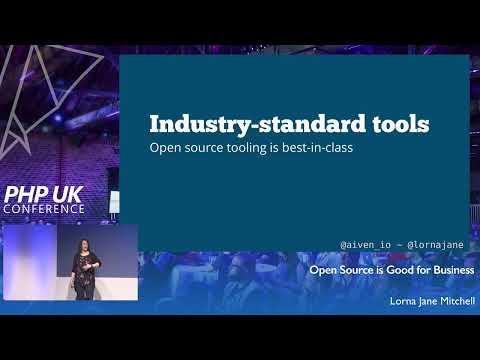
- 12:16Industry-standard tools Open source tooling is best-in-class
- 14:06Enable and participate Consider yourself a stakeholder in every tool you use. • Policy on employee contributions to open source outside work • Package publishing policy, including license preference and maintainer process
- 17:43Borrowed work process Open source has much to teach us
- 19:03Professional growth Learn many skills, and meet many people
- 21:27Contributing at work About half of open source contributors are paid
- 23:36Contributing in teams Working on open source together is great
- 26:07Bring benefits to business Offer time, expertise or services to projects you use - Support your dependencies with Tidelift Join the OSI, OpenSSF, OpenUK, PHP Foundation
- 31:28Open Source, Business
related talks
 55mStrategic Benefits of Contributing to Open Source: For businesses and individuals
 23mMaking the Business Case for Contributing to Open Source
 51mSoftware Freedom Means Business Value
 34mConsumers To Contributors: Open Source As a Competitive Advantage
 23mInvesting in Open-Source
 24mBuilding On Success: What’s the Future of Open Source?
 23mMaking the Business Case for Contributing to Open Source
 44mOpen Source in Financial Services: The Good, The Bad and the Ugly