Analyzing cacheline contention using perf c2c
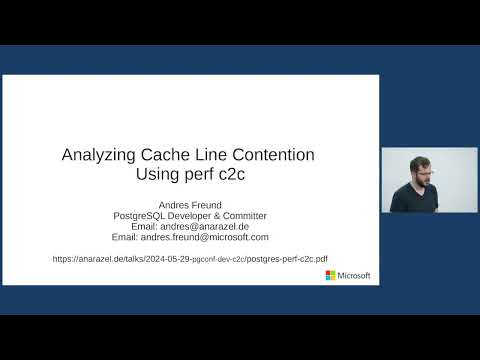
summary
Demonstrates using perf c2c to locate true cacheline contention in Postgres and traces how that led to snapshot scalability work in PG 14. Covers cache hierarchy, coherence protocol behavior, and how HitM events reveal modified-line transfers across cores/sockets. Shows a concrete case: buffer descriptor false sharing around lock/state fields, and a five-line padding change (separating lock from read-mostly fields) raises pgbench throughput from ~7,500 to ~10,000 tx/s at 16 clients. Describes recording and reporting tips and using buffer descriptor padding as a practical fix.
AI-written summary · about
chapters (10)
- 0:00Introduction to cacheline contention
- 1:13Hardware cache structure basics
- 8:46What is cacheline contention
- 13:20False sharing scenarios explained
- 16:51Solutions to cacheline issues
- 18:57What is perf c2c
- 23:37Analyzing with perf c2c report
- 34:09Case study: buffer descriptor fix
- 40:11Caveats and performance impact
- 41:59Q&A session
related talks
 45mPerformance lab. The power of the perf tool!
 56mPerformance Improvements in PostgreSQL9 2
 27mAnalyzing Postgres performance problems using perf and eBPF
 52mNUMA vs PostgreSQL
 56mPostgreSQL at low Level: stay curious!
 48mLightning Talks
 46mOptimizing High-Contention Writes in PostgreSQL
 04mRoad to Percona Live 2022 - Yahav Biran - PostgreSQL Talk