The Rise of Vector Databases - Lessons from the Milvus Community

summary
Explains why Milvus is a purpose-built vector database (open source, ~20,000 stars on GitHub) and when to use it versus raw libraries like FAISS, showing that brute‑force search becomes impractical past ~1M vectors and that approximate nearest neighbor indexes (hash, quantization, graph) trade tiny recall loss for large speedups (95–99% recall). Describes deployment options (Kubernetes cluster, standalone, embedded), the CVP pattern (LLM as processor + vector DB as storage + prompt as code), a working demo osschat.io, and the correct Python API call connections.connect.
AI-written summary · about
chapters (17)
- 0:00Intro
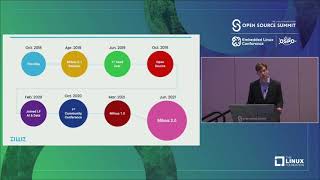
- 0:17Speaker
- 0:35zilliz
- 2:20What is Unstructured Data?
- 2:34The Evolution of Data
- 4:36Digits
- 8:23Approximate Nearest Neighbor Search
- 9:40Vector Database Overview
- 9:57Why Purpose-built?
- 10:40Purpose-built is Complex
- 13:19ChatGPT Craziness
- 14:06GPTs are Stochastic
- 16:01Hallucination Example
- 18:13The Solution to Hallucination
- 19:00The CVP Framework
- 20:10Using Vectors to Represent Data
- 23:24Key Takeaways
related talks
 35mMilvus 2.0: Building the World's Most Advanced Open-source Vector Database
 30mMilvus Vector Database: Unlocking the Future of Open Source Vector Databases
 37mMilvus: Scaling Vector Data Solutions with Gen AI
 51mUnleashing the Potential of Cloud-Native Vector Databases
- 37mMilvus: Scaling Vector Data Solutions with Gen AI
 36mMilvus: Scaling Vector Data Solutions with Gen AI
 29mThe Evolution of Milvus: A Cloud-Native Vector Database
 31mMilvus 2.0: A Vector Database With Cloud-Native Architecture