MLOps: Why DevOps Solutions Fall Short in the Machine Learning...

summary
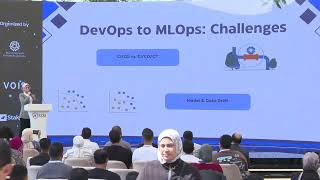
DevOps tooling repeatedly fails ML teams because data scientists are a different user group and ML logic is implicit in data not code; platform attempts replace Uzi with microservice pipelines and Kubeflow without a model registry both break workflows and Uzi stays in use. GitLab ships notebook diffs (shows JSON notebooks in MR), builds a native model experiments feature that acts as an MLflow-compatible backend with zero setup and project-scoped access, and is actively developing a model registry and LLMOps support.
AI-written summary · about
chapters (18)
- 0:00MLOps introduction
- 1:05What is MLOps vs DevOps
- 2:37DevOps limits for data science
- 7:10Why DevOps falls short for machine learning
- 11:00ML development differences
- 16:18GitLab’s MLOps approach
- 19:06Unified MLOps vision
- 22:17Jupyter notebook reviews in GitLab
- 23:00Model experiment tracking in GitLab
- 24:23MLflow integration in GitLab
- 26:30Model registry in GitLab
- 27:57LLMOps challenges
- 30:05MLOps summary
- 32:21Q&A on data versioning
- 34:04Q&A on model registry
- 35:27Q&A on model deployment
- 36:35Q&A on LLM deployment
- 38:23Q&A on model explainability
related talks
 41mSponsored Session: MLOps: Why DevOps Solutions Fall Short in the Machine Learning World
 01mMLOps: Applying DevOps to ML
 36mIs the MLOps tooling the same as the DevOps tooling?
 14mWhy Your DevOps Skills Are Your MLOps
 44mDevOps for Machine Learning - why is it different?
 13mMLOps at Scale
 20mBridging the gap between DevOps & MLOps
 47mMachine Learning in Production: An Intro to MLOps.