Hide Yo’ Kids: Hacking Your Family’s Connected Things
summary
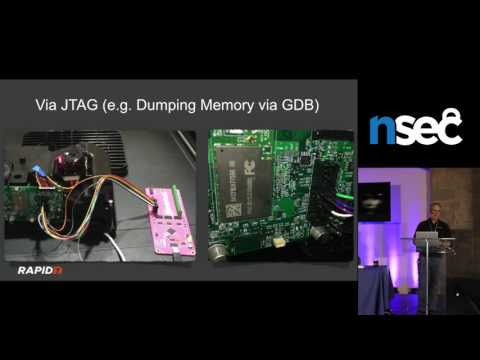
Research covers nine Internet-connected baby monitors plus a Fisher‑Price smart toy and a Hero smartwatch and finds account takeovers, device hijacking, hardcoded/backdoor credentials, unauthorized file downloading, and ancient firmware. Techniques include firmware dumping with SOIC clip and flashrom, binwalk, JTAG/JTAGulator, ADB on the toy, Wireshark and hashcat. Examples: one $260 camera ships with two 2012 RCEs and telnet/root/default users, FTP per device with unlimited quota, and enumerated S3 video buckets to download every alert clip; toy ADB gives root and profile control; smartwatch API leaks let an attacker add themselves and read full history.
AI-written summary · about
chapters (20)
- 0:00Introduction to IoT security
- 1:01Why IoT is a hacker’s playground
- 3:48Firmware extraction techniques
- 8:07JTAG and UART for deep access
- 10:13Mobile app vulnerabilities
- 13:05Can you buy security in IoT?
- 14:07Funny yet flawed baby monitors
- 16:58Wi-Fi baby monitor findings
- 20:32TrendNet camera security review
- 21:54iBaby camera vulnerabilities
- 25:29iBaby cloud storage exposure
- 31:47Philips camera security regression
- 38:13Network traversal and proxy risks
- 41:46Vendor reactions and fixes
- 42:28Summer Infant brand flaws
- 47:22New York state investigation
- 48:04Fisher-Price smart toy hacking
- 53:20Hero Smartwatch privacy risks
- 57:17Securing IoT devices proactively
- 58:19Q&A and closing remarks