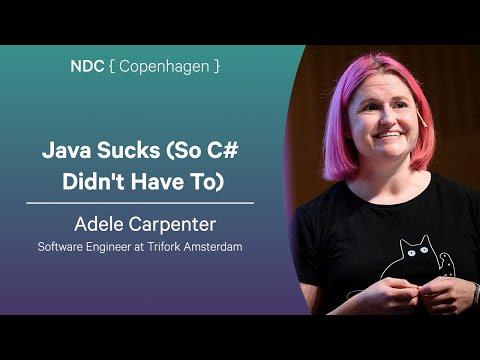
Java Sucks (So C# Didn't Have To)
summary
Looks at concrete tradeoffs: shows a Box generics demo and explains why Java uses type erasure (added in Java 1.5 for backwards compatibility), why libraries like Jackson need explicit type tokens, and how checked exceptions force clunky try/catch workarounds inside lambdas. Describes runtime surprises from virtual threads (Java 21) — thread pinning that caused deadlocks and the subsequent mitigation in later releases — and the decade‑long slog of Project Valhalla to add value types, summarised as checked design tradeoffs vs. modern ergonomics.
AI-written summary · about
chapters (19)
- 0:00Introduction
- 7:52Java’s origins and design
- 12:26Xerox PARC influences
- 15:40Robustness and security
- 17:27Portability and architecture
- 18:31Performance and JIT
- 20:41Java’s developer frustrations
- 21:25Type erasure in generics
- 26:24Generics delay story
- 28:54Java’s community evolution
- 31:43C# generics and reification
- 33:30Checked exceptions impact
- 37:43Workarounds for exceptions
- 40:33Boilerplate and shortcomings
- 41:21Virtual threads challenges
- 44:51Project Valhalla delays
- 49:06Valhalla’s progress and debt
- 51:57Re-evaluating Java’s legacy
- 54:25Java’s enduring value
related talks
 58mJava Sucks (So C# Didn't Have To)
 16mThe past, present and future of the Java type system
 49mJava 8: the good, the bad and the ugly
 38mThe Sincerest Form of Flattery
 50mModern Java Puzzlers
 41mJava Made (Somewhat) Simple
 43mRolling with New Java Enhancements: Practical Design Patterns
 59mMove Deliberately and Don’t Break Anything: Lessons from...Java